
Designing for mom guilt and bringing back control
COMPANY
Aumio
ROLE
Founding Product Designer
SCOPE
0-1 · iOS Native · Mobile App ·
TIMELINE
Aug 2023 untilApr 2026
Research Approach
Qualitative interiews: Along with the user researcher I'd accompany to analyse qualitative interviews and sense.make on Dovetail.
Moderated interviews: For early problem discovery we would pitch potential customers three competitor products to learn from what is currently working for them
Key Meterics
Activation: % of new families who complete onboarding + log first sleep within 48h→ From onboarding to first 7 days trial journey
Conversion: Trial start rate to trial conversion by having felt at least one successful sleep routine. CTR on 'Subscribe now' → Paywall design
Retention: Monthly active paid users, 60 Day Customer Retention, Subscription repeat purchase rate.
My Role
As the founding product designer, I owned the end-to-end design of this product from zero to launch and beyond.
I worked alongside 2 engineers and a UX researcher, collaborating directly with the founding team to shape both product vision and execution. My role stretched across three modes: designer, research co-pilot, and workshop facilitator.
This was the first time I operated without a design system, a defined brief, or a team structure to fall back on and it taught me more about product design than any role before it.
32%
Trial-start-to-trial conversion rate
4.9 stars
Ratings on Apple store + Apple
Feature Nomination
250K
Installs on Apple Store in
8 months time since launch
32%
Trial-start-to-trial conversion rate
4.9 stars
Ratings on Apple store + Apple
Feature Nomination
4.9 stars
Ratings on Apple store + Apple
Feature Nomination
Jobs To Be Done
I need time for myself
I want to know when my baby falls asleep so I can meet friends, do laundry and relax.
I need reassurance
I gave up something. I want my struggles to be acknowledged. I need the support of close ones.
I want my child to be happy
I want to give my child what is good for them. I want valuable time with my family.
Tracking
baby
sleep

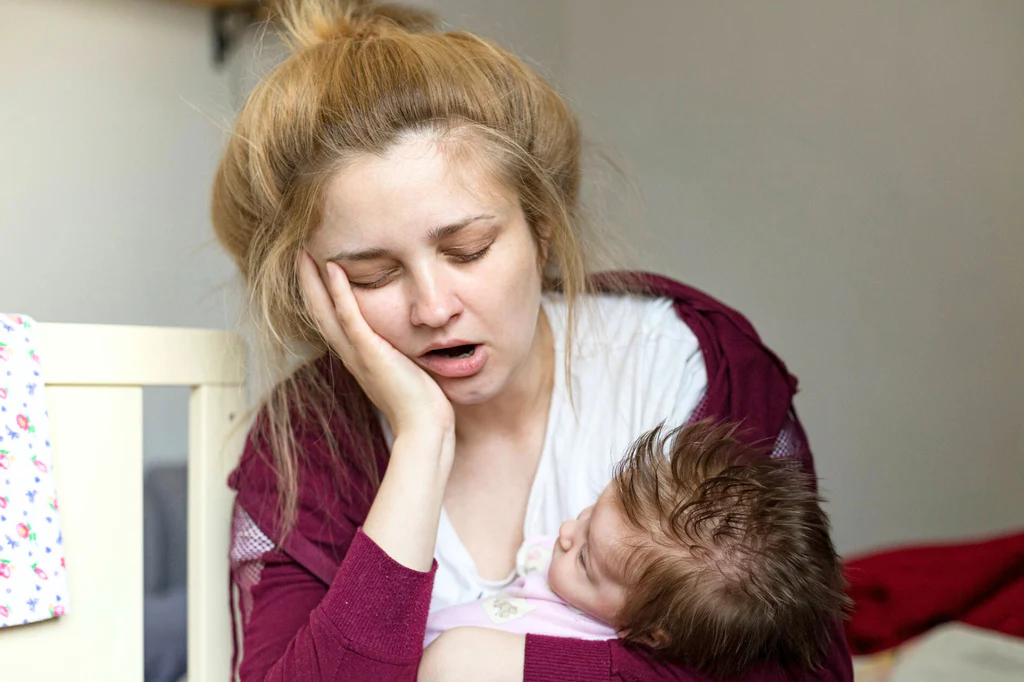
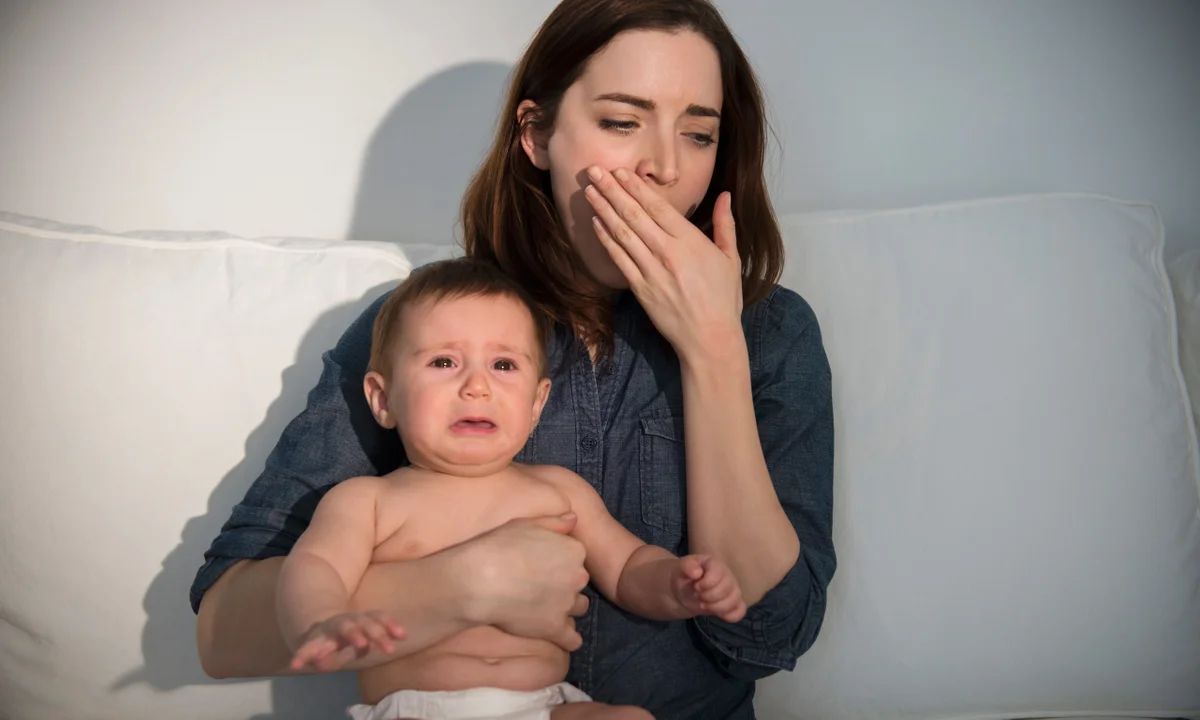

shouldn't
need
spreadsheets.
How
might
we
help
sleep deprived,

parents
build
guilt-free
calm
routine?

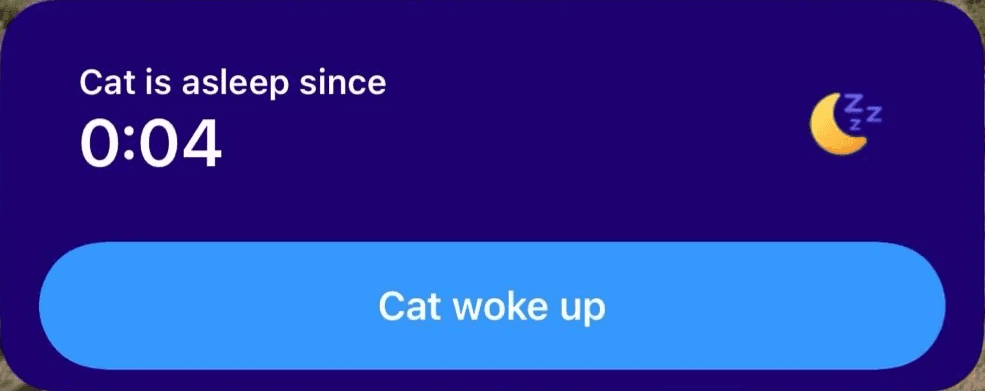
Live-design tracker
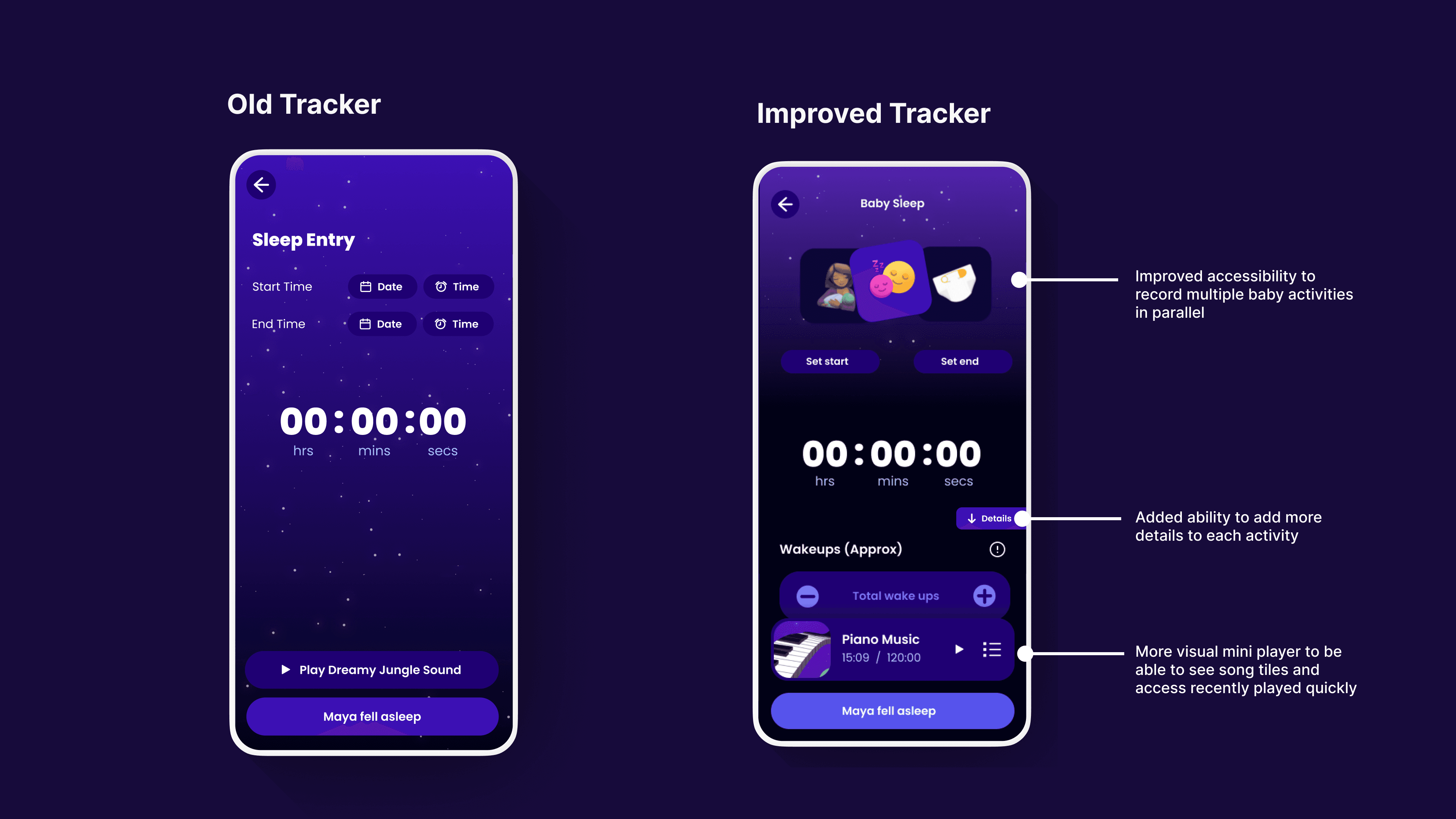
Most usage happens through the live tracker, not in-app. So I designed it as its own lock-screen surface core functionality parents reach without opening anything.
Designing for the context parents actually use beats in-app depth they don't. A deliberate trade-off that reframed the product the tracker became the primary surface, with logging effort near-zero.

Empathy driven UX Copy
When I noticed that 90% of our active users were moms, I pushed for a shift in how we thought about the product audience.
I proposed a small but deliberate addition: an affirmation feature designed specifically around the emotional reality of motherhood. A signal that the product saw her, not just her baby's sleep schedule.
The founders backed it, and what began as one feature quietly shifted the company's design lens toward motherhood entirely.

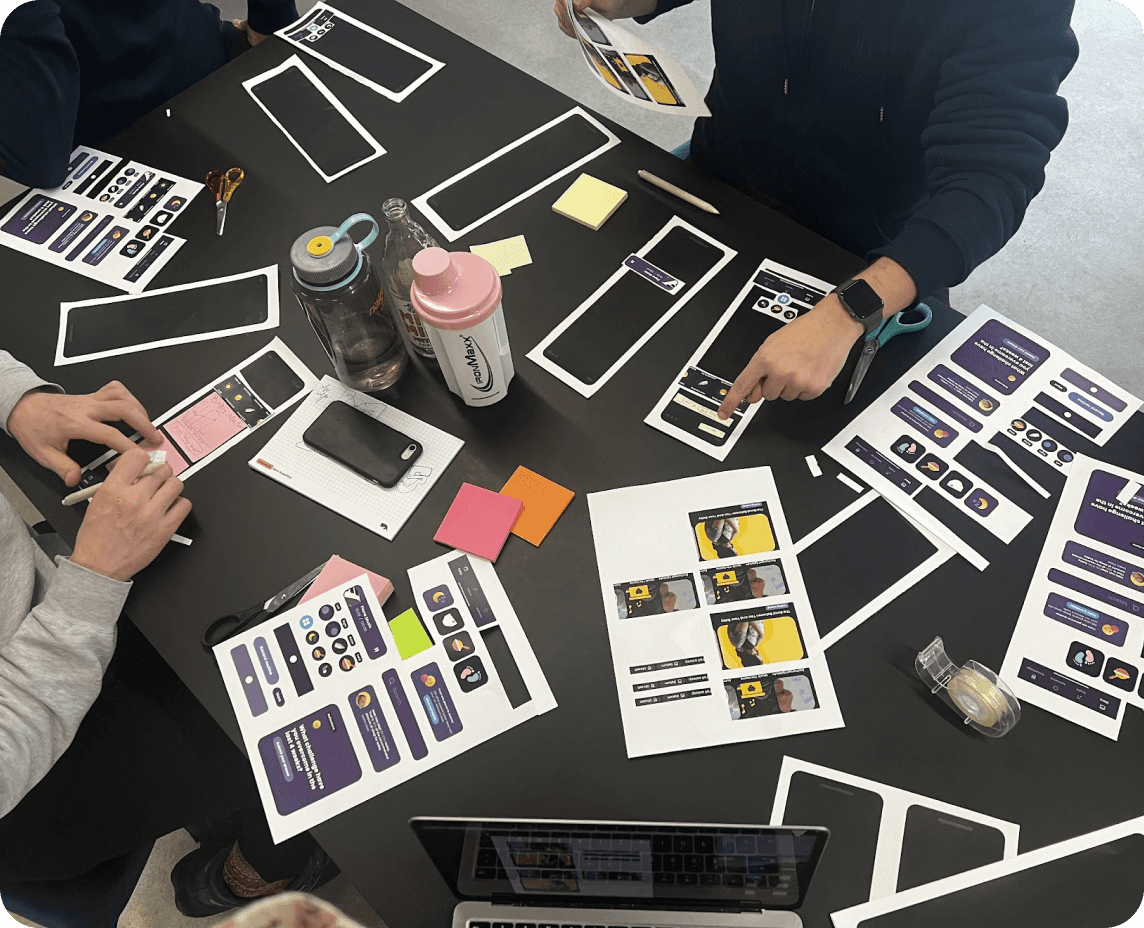
Co-creative workshops
I ran co-creative workshops with stakeholders to align on the MVP scope turning scattered opinions into fast, shared decisions we could build on without backtracking.
Simplifying data for parents
A baby's whole day, told as a calm, glanceable story clarity over data density. The focus of this was to incorporate similar components and design assets to build familiarity and clarity.


Designing for mom-guilt
& bringing back control
LIVE PROJECT
Aumio.de
mY role
Founding Designer
SCOPE
0-1 · iOS Native · Mobile App ·
timeline
Aug 2023 until
April 2025
Challenge
Aumio Kids is a children's wellness app known for its audio-led approach to sleep soothing sounds, guided meditations, and white noise trusted by families across Europe.
When the founding team noticed 40% parents of newborns were dropping off far earlier than older age groups.
This revealed a bigger opportunity: a new product positioning targeting the youngest parents on the platform combining Aumio's existing audio strength with a lightweight, one-tap tracking experience that gave new parents clarity over their baby's sleep and daily patterns without the friction. Happy Baby was the answer.
My Role
As the founding product designer, I owned the end-to-end design of this product from zero to launch and beyond.
I worked alongside 2 engineers and a UX researcher, collaborating directly with the founding team to shape both product vision and execution. My role stretched across three modes: designer, research co-pilot, and workshop facilitator.
This was the first time I operated without a design system, a defined brief, or a team structure to fall back on and it taught me more about product design than any role before it.
250K
Installs on Apple Store in
8 months time since launch
32%
Trial-start-to-trial conversion rate
4.9 stars
Ratings on Apple store + Apple
Feature Nomination
Ratings on Apple store + AppleFeature Nomination
Jobs To Be Done
I need time for myself
I want to know when my baby falls asleep so I can meet friends, do laundry and relax.
I need reassurance
I gave up something. I want my struggles to be acknowledged. I need the support of close ones.
I want my child to be happy
I want to give my child what is good for them. I want valuable time with my family.
Tracking
baby
sleep
shouldn't
need
spreadsheets.
How
might
we
help
sleep deprived,
parents
build
guilt-free
calm
routine?
Research Approach
Qualitative interiews: Along with the user researcher I'd accompany to analyse qualitative interviews and sense-make on Dovetail.
Moderated interviews: For early problem discovery we would pitch potential customers three competitor products to learn from what is currently working for them
Key Metrics
Activation: % of new families who complete onboarding + log first sleep within 48h→ From onboarding to first 7 days trial journey
Conversion: Trial start rate to trial conversion by having felt at least one successful sleep routine. CTR on 'Subscribe now' → Paywall design
Retention: Monthly active paid users, 60 Day Customer Retention, Subscription repeat purchase rate.
Final Designs
Empathy driven UX Copy
When I noticed that 90% of our active users were moms, I pushed for a shift in how we thought about the product audience.
I proposed a small but deliberate addition: an affirmation feature designed specifically around the emotional reality of motherhood. A signal that the product saw her, not just her baby's sleep schedule.
The founders backed it, and what began as one feature quietly shifted the company's design lens toward motherhood entirely.
Live-design tracker
Most usage happens through the live tracker, not in-app. So I designed it as its own lock-screen surface core functionality parents reach without opening anything.
Designing for the context parents actually use beats in-app depth they don't. A deliberate trade-off that reframed the product the tracker became the primary surface, with logging effort near-zero.


A deliberate break from iOS convention
A Floating Action Button on iOS was a deliberate break from platform convention chosen so mothers multitasking with an infant could reach every primary action one-handed.
Built in FlutterFlow, which gave us the flexibility to keep this experience unified and user-centric across platforms.
Co-creative workshops
I ran co-creative workshops with stakeholders to align on the MVP scope turning scattered opinions into fast, shared decisions we could build on without backtracking.
Simplifying data for parents
A baby's whole day, told as a calm, glanceable story clarity over data density. The focus of this was to incorporate similar components and design assets to build familiarity and clarity.
Evolution of App

Constraints & Tradeoffs
In a lean startup team, I learned to ship fast and learn from experiments.
The MVP-to-V3 approach let us gather feedback gradually and adjust with each release. The ownership, autonomy, and impact I earned over that time is what grew me from a junior to a mid-level designer. The problem space was also challenging and helped me learn about
What I'd do differently next time?
AI wasn't part of our process back then. Today it would let us prototype rapidly, pressure-test our thinking, and catch product risks early the kind we only discovered by shipping.
I'd also tie each hypothesis to clear business and proxy metrics from the start defining what success looks like upfront, then tracking the data to prove whether a bet actually worked,.
Constraints & Tradeoffs
In a lean startup team, I learned to ship fast and learn from experiments.
The MVP-to-V3 approach let us gather feedback gradually and adjust with each release. The ownership, autonomy, and impact I earned over that time is what grew me from a junior to a mid-level designer. The problem space was also challenging and helped me learn about
Moderated interviews: For early problem discovery we would pitch potential customers three competitor products to learn from what is currently working for them
Key Meterics
AI wasn't part of our process back then. Today it would let us prototype rapidly, pressure-test our thinking, and catch product risks early the kind we only discovered by shipping.
I'd also tie each hypothesis to clear business and proxy metrics from the start defining what success looks like upfront, then tracking the data to prove whether a bet actually worked,.