Trust by Design:
Turning Skeptics Into Buyers

LIVE PROJECT

Yepoda.eu

mY role

UI/UX Designer

SCOPE

CRO · Experimentation ·
E-commerce · Brand System

timeline

Jun 2025 - Mar 2026

Trust by Design:
Turning Skeptics Into Buyers

COMPANY

Yepoda.eu

ROLE

UX/UI Designer

SCOPE

CRO · Website · Growth · A/B Tests

TIMELINE

Jun 2025 until Mar 2026

Challenge

Yepoda was redefining its "clean-beauty, clinical" storytelling positioning at the same time I was assigned to redesign high-impact seasonal landing pages across 7 markets as first in-house design hire.

Goal: Find and validate conversion levers while the proposition, visual direction, and campaign requirements were still evolving turning an undefined brand shift into a working, testable landing page experience.

Collaborated with: Founders (on positioning and brand direction), PM and E-commerce Manager (on scope and prioritization), and engineering (on implementation within Shopify's constraints).

Data & Research

Analytics showed a 69% drop-off on the homepage particularly among new users arriving from social media landing on generic collection pages. The quantitative data told us what was happening, but not why.

Moderated research would've given more depth, but Yepoda had no research history and no time for it. I proposed unmoderated testing instead with signal in 24 hours.


The real question: why weren't first-time visitors trusting Yepoda enough to continue? How might we turn strangers into believers?

2.5%

Uplift in New User Conversion

3.3%

Increase in PDP views

7 markets

Brand system adopted org-wide

Challenge

Yepoda was shifting from a broad “clean beauty” story toward a more clinical, credible positioning while entering peak season with aggressive growth expectations. At the same time, I was tasked with redesigning high-impact landing experiences across 7 markets as the company’s first in-house designer.


Goal: Find and validate conversion levers that could translate the new brand proposition into a high-converting landing experience.

Collaborated with: Founders (on positioning and brand direction), PM and E-commerce Manager (on scope and prioritization), and engineering (on implementation within Shopify's constraints).

Data & Research

Signal: 69% of visitors dropped off before meaningful product discovery. The biggest gap was among new visitors arriving from social were often landing on generic collection pages without enough context.

Constraint: Yepoda had limited shared understanding of customers and peak season left little time for moderated research. I used rapid unmoderated testing to identify the trust barriers behind the drop-off.

Research question: What information or signals do first-time visitors need before they're willing to explore a product?

2.5%

Uplift in New User Conversion

3.3%

Increase in PDP views

7 markets

Brand system adopted org-wide

How

might we

turn

evolving

brand proposition

About Image
About Image
About Image
About Image

into

landing page

experience

that builds trust quickly

and converts

new visitors?

User Research

Success Metric KPI Tree

From Repetitive Research to a Reusable AI System
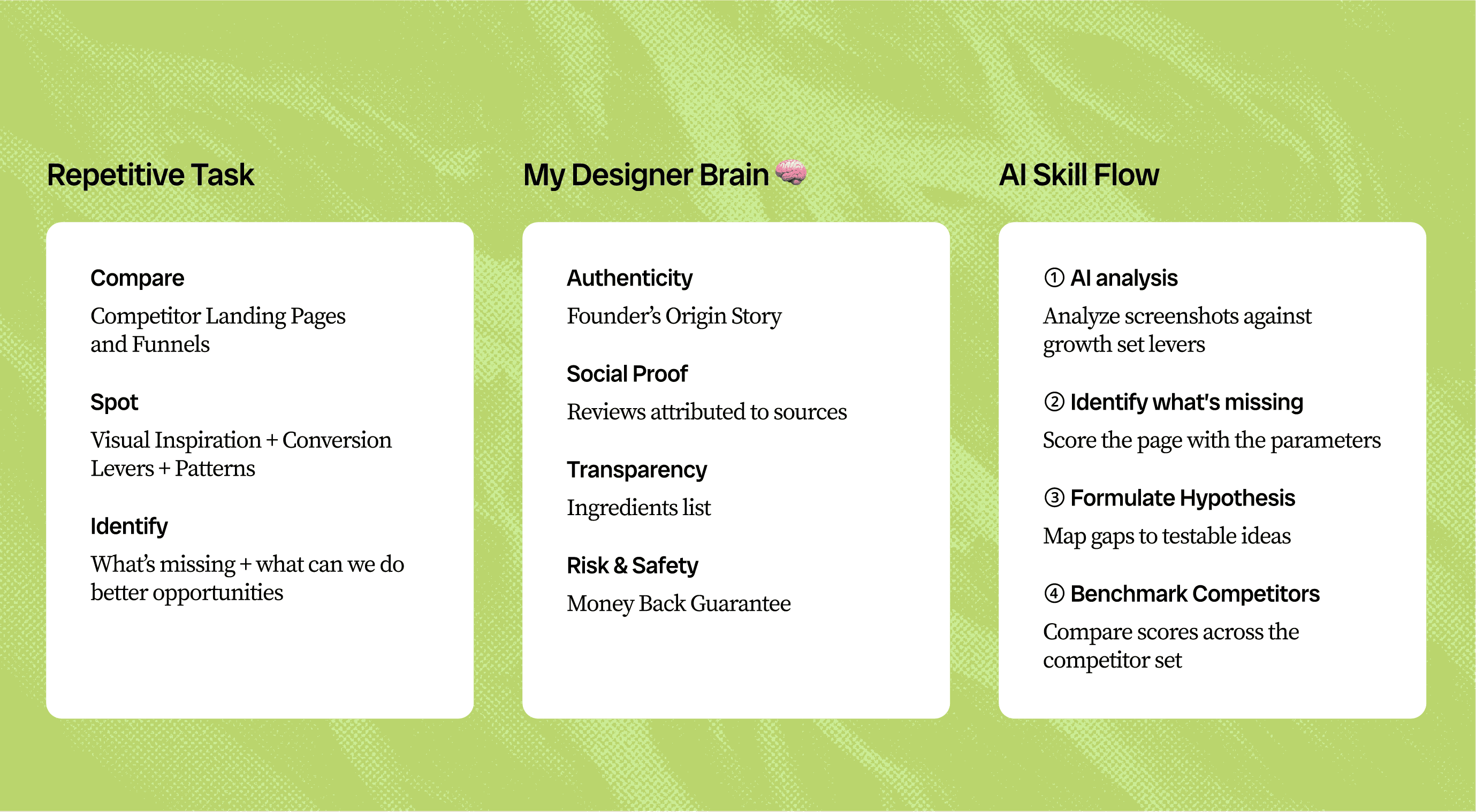
I turned hours of manual screenshot-collecting into a Custom Claude Skill so I could spend my time on the judgment calls (what's missing, what to test next), This helped me to reduce my desk research time by 2.5x.


A/B Tests
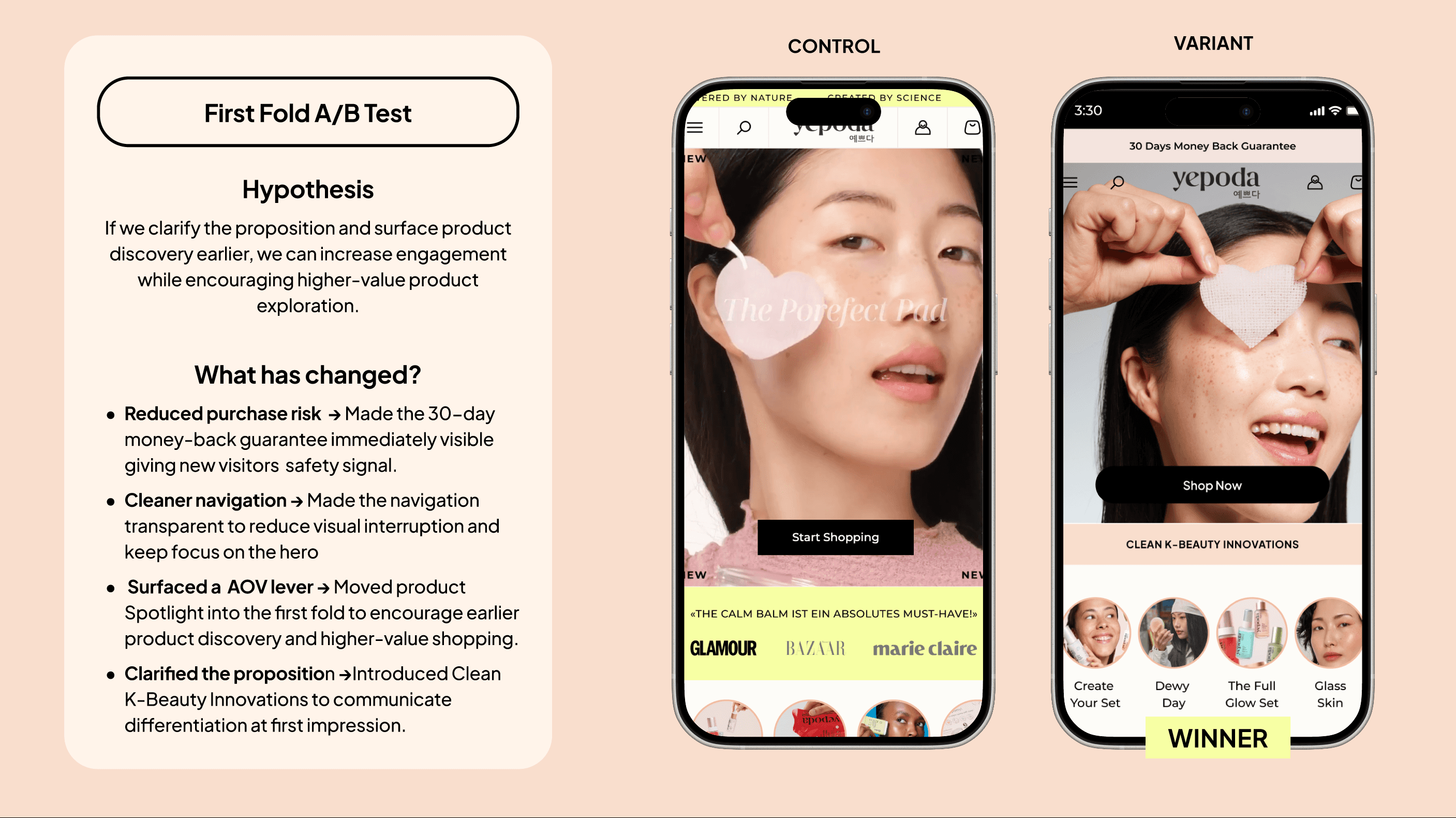
Learnings from the experiments:

Prioritize conversion signals. Focus on elements that directly drive AOV, like Spotlight encouraging product sets.
When a concept relies on assets from other teams, align early on the product problem, quality bar, ownership, and effort needed to make the idea work.
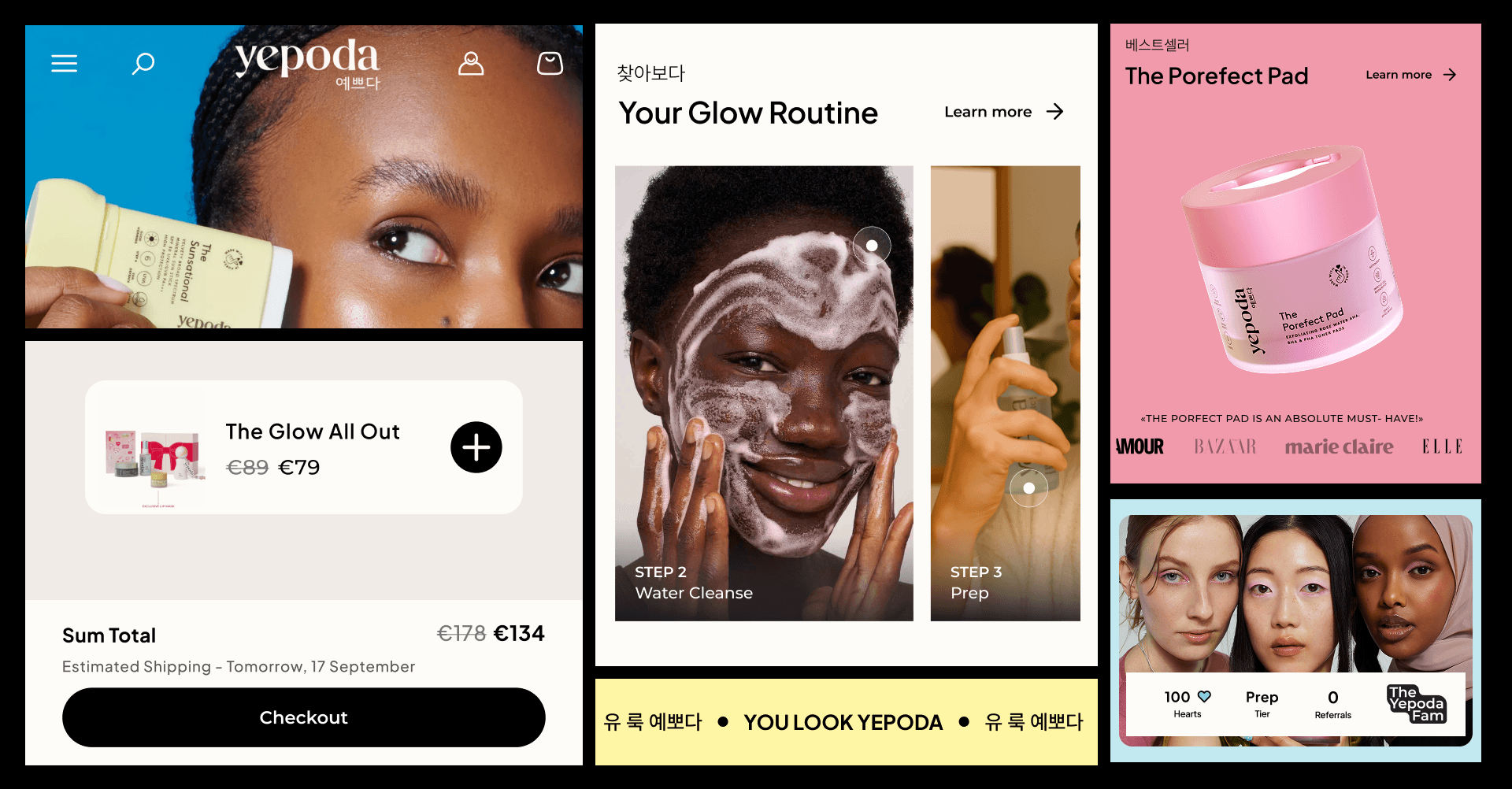
When adapting tokens or components for growth, align on how they should be used across marketing touchpoints so the system stays consistent while remaining flexible.
Constraints & Tradeoffs

  • Evolving positioning → Anchored the digital experience to the packaging direction already approved.

  • Peak-season deadline→ Prioritized testable conversion levers over a complete brand redesign

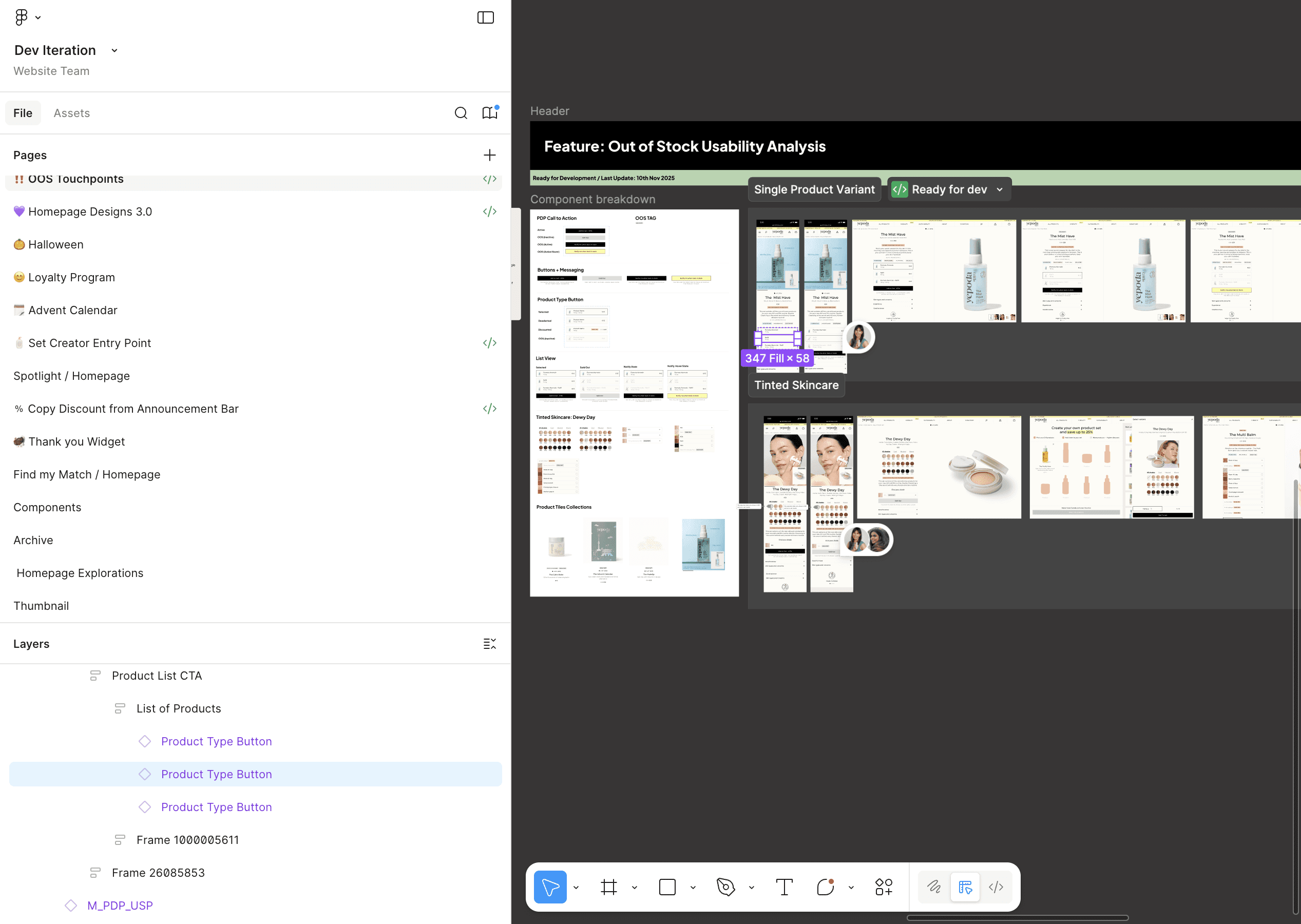
  • Growing animation scope → Replaced a 3D concept with a lightweight interaction that required no additional engineering cost.

What I'd do differently next time?

  • Build a trust-first component library earlier. Scalable proof and social validation blocks, not one-off assets per campaign.


  • Instrument before designing- Heat maps and unified customer care + marketing data should inform hypotheses, not validate them after the fact.

  • Prototype in low-fidelity longer - Use AI (Claude, Magic Patterns, Antigravity) to stress-test concepts before touching high-fidelity

Constraints & Tradeoffs

  • Undefined brand identity, fixed deadline. Positioning was still evolving during peak season. I anchored to what was already committed (packaging) and used competitor research + pitch decks to stay aligned with founders while moving the page forward.

  • Animation vs. deadline. Scope kept growing around animations. With my PM, I cut a planned 3D animation down to a lighter interaction with no engineering cost.

What I'd do differently

  • Build a trust-first component library earlier. Scalable proof and social validation blocks, not one-off assets per campaign.


  • Instrument before designing- Heat maps and unified customer care + marketing data should inform hypotheses, not validate them after the fact.

  • Prototype in low-fidelity longer - Use AI (Claude, Magic Patterns, Antigravity) to stress-test concepts before touching high-fidelity

Create a free website with Framer, the website builder loved by startups, designers and agencies.